Datalogging health
Every trend log checked for gaps, flatlines and stuck values, so findings stand on data you can trust.
 Kidd Automation
 › Building energy audit
Commercial buildings · Ireland
Find the energy your building wastes, prove the savings and cut your carbon. A Building Performance & Energy Audit reads the trend logs your building management system already records, so it shows how the plant actually ran, hour by hour, not how it looked on the day of a walk round.
Who it's for
Offices, apartment blocks with central plant, schools, healthcare, hotels and mixed-use buildings, including buildings still in commissioning or defects. If the building has a BMS logging trends, the audit can usually start remotely.
What the audit checks
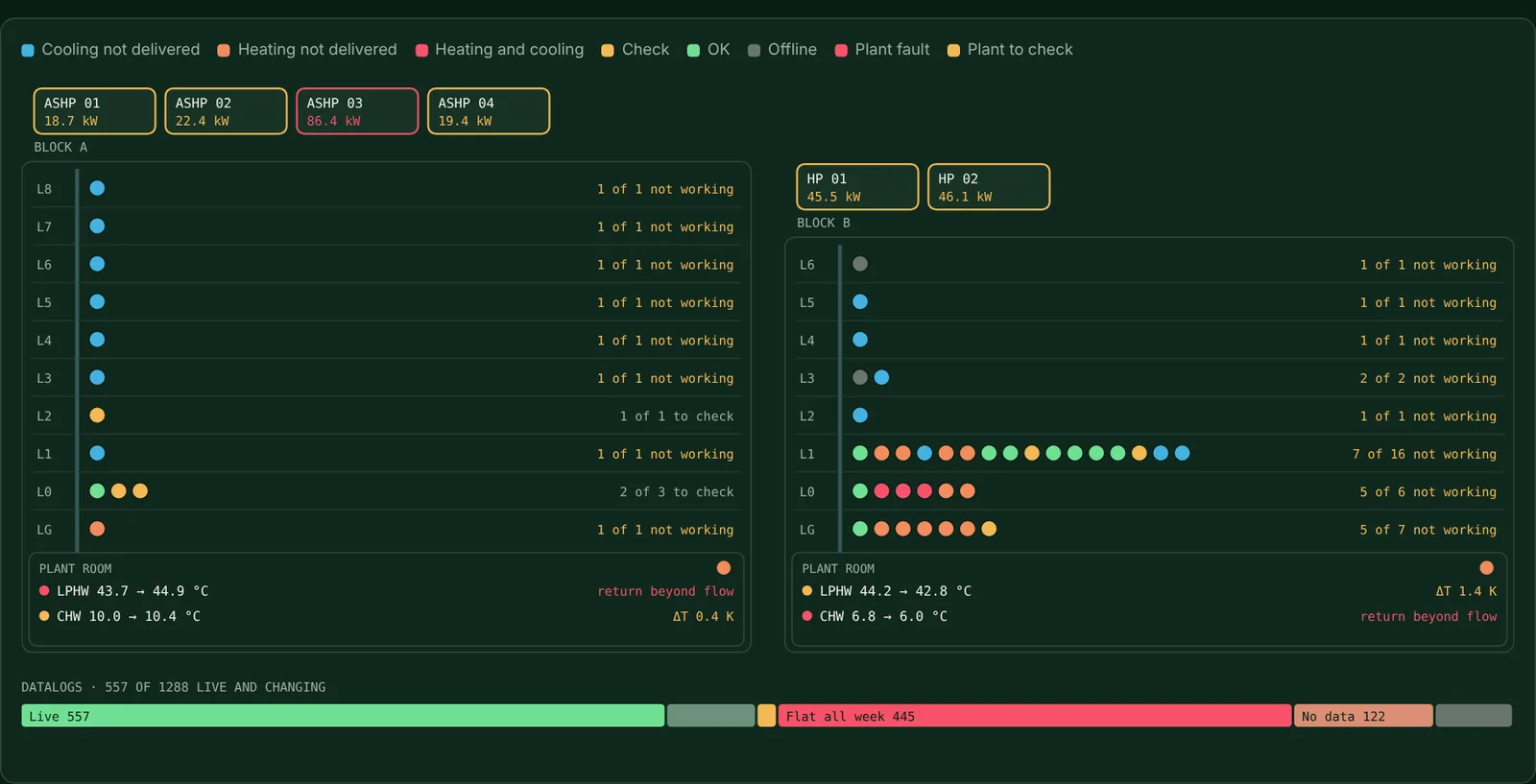
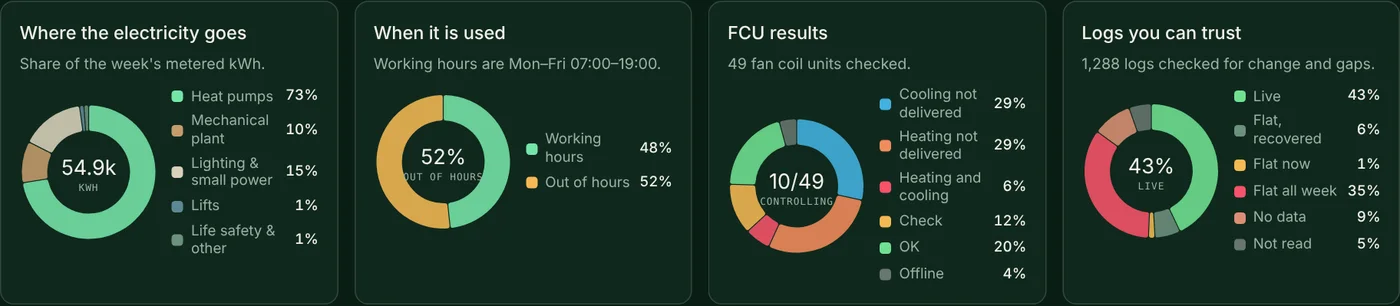
Every trend log checked for gaps, flatlines and stuck values, so findings stand on data you can trust.
Consumption by load group, peak and night baseload, and how much is used when the building is empty.
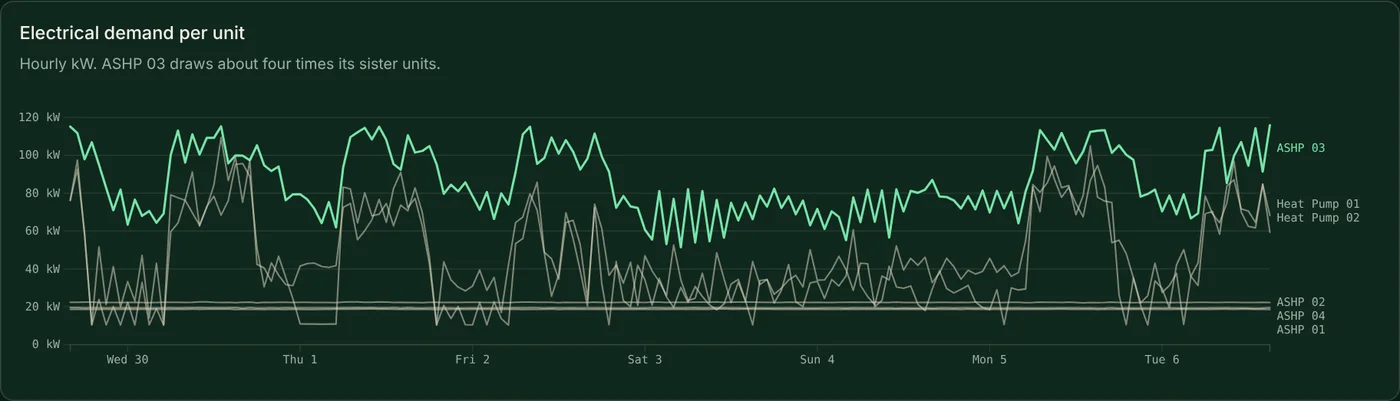
Run hours, demand per unit, and whether each unit delivers heat. Units drawing far more than their sister units stand out.
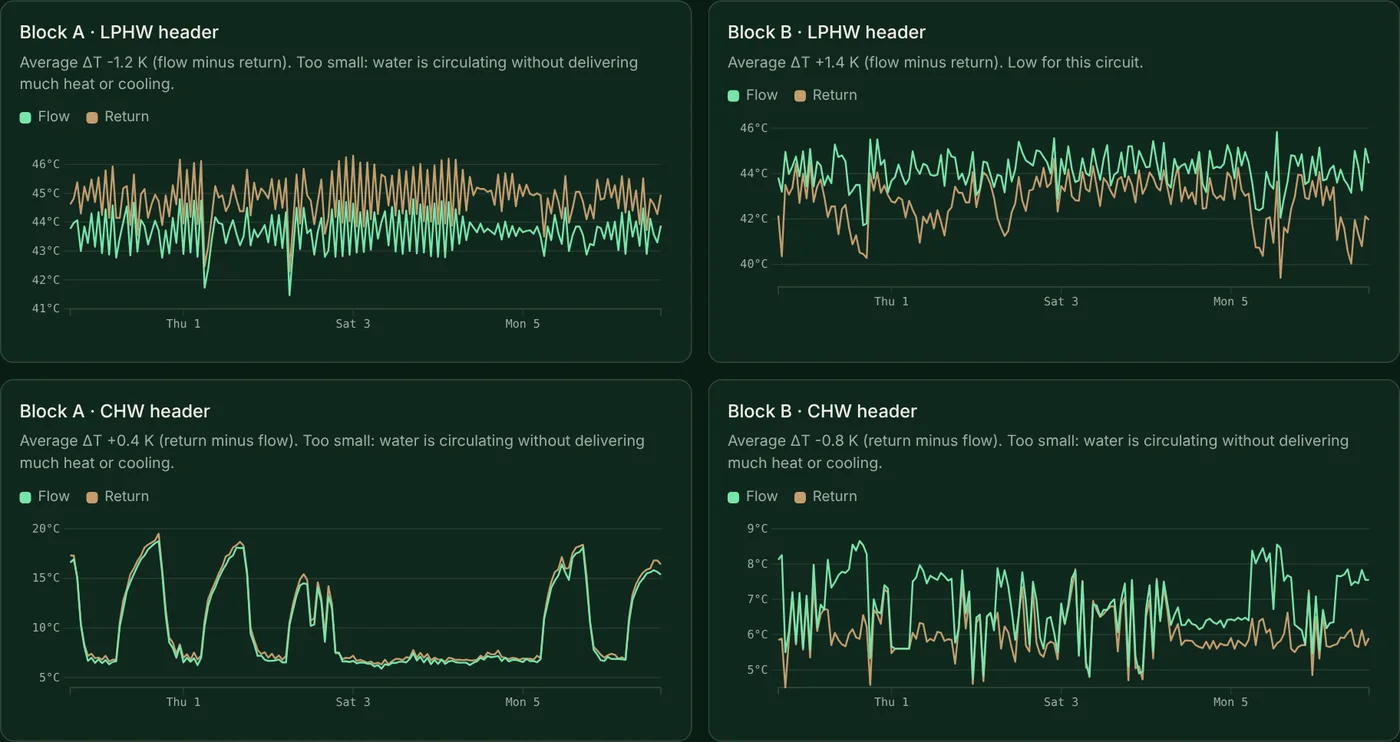
Flow and return at each header. Circuits that circulate without delivering heating or cooling are flagged.
Valves that open with no effect, units that hunt or saturate, heating and cooling fighting, rooms off setpoint.
Plant left running, setpoints out of line, meters not read or logging on the wrong register.
How it works
Data is read with a read-only account that is removed afterwards. Nothing on your BMS is changed.
Every trend log is checked for change and gaps before anything is concluded.
Out-of-hours running, plant left on, heating and cooling fighting, fan coils that never deliver.
Each opportunity in kWh, euro and tonnes of CO₂e, at SEAI's grid carbon factor, ranked by what it saves.
Each finding goes to the responsible mechanical, electrical or controls contractor with the evidence. We advise on priorities and the process.
Every repair is checked in the trend data, with before-and-after figures.
What you receive
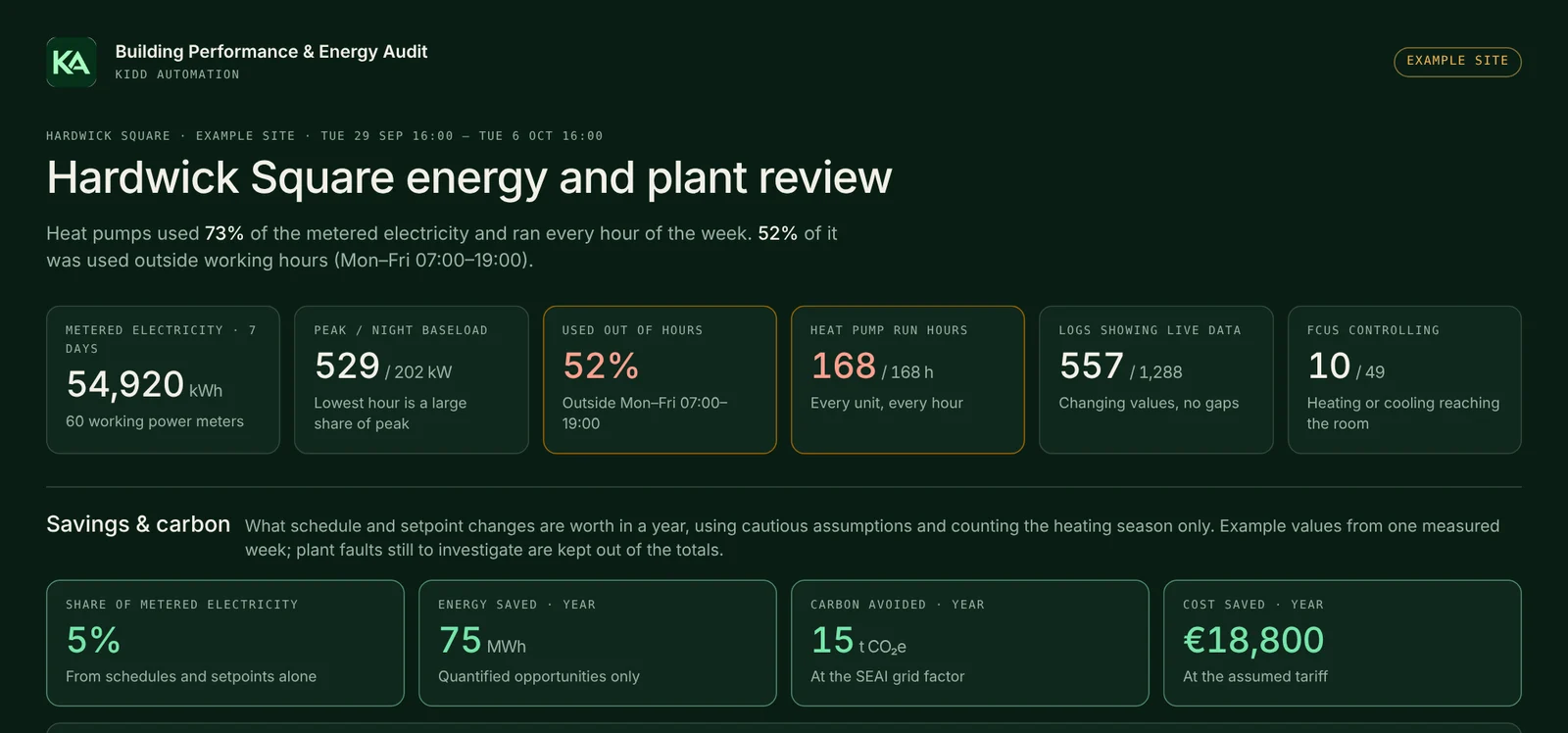
Not a static report: a dashboard of your building, modelled from its own data, with a findings register showing the evidence and the trade responsible for each repair. Below is an example from a real building under commissioning, with the names changed.
Example site: cautious savings (about 5% of metered electricity) from one measured week counted over a 28-week heating season. Plant faults are passed to the responsible contractor and not costed until the cause is confirmed.
After the audit
Keep the savings: every trend log checked continuously, waste caught as it starts, and a monthly report on energy, carbon and cost. Schedules, setpoints and control loops are tuned from the data, with every change approved by you or your controls contractor.
Most of the analysis is done from the BMS data, with site visits to confirm findings.
Findings are evidenced and handed to the right contractor. We verify the fix.
Questions
An energy audit built from the trend logs your building management system already records. Instead of a one-day walk round, it shows how the plant actually ran, hour by hour, over a full week or more: when it ran, what it used, and whether it delivered heating and cooling.
Commercial and public buildings with a BMS: offices, apartment blocks with central plant, schools, healthcare, hotels and mixed-use buildings, including buildings still in commissioning or defects.
The audit tools are built on Tridium Niagara 4. Trend, Cylon, ABB, Distech, Schneider and Siemens systems can be audited on request, using trend exports from the system.
No. Data is read with a read-only account that is removed after the audit. No setpoints, schedules or control settings are changed.
Kidd Automation identifies and evidences each issue. Repairs are carried out by your mechanical, electrical or controls contractor, with our advice on priorities and the process, and every fix is verified in the data afterwards.
It depends on the building. In the example audit, schedule and setpoint changes alone were worth about 5% of metered electricity, around €18,800 and 15 tonnes of CO₂e a year, using cautious assumptions. Plant faults are passed on and only costed once the cause is confirmed.
Based in Newbridge, Co. Kildare, covering Dublin, Leinster and buildings across Ireland. Much of the analysis is done remotely from the BMS data, with site visits to confirm findings.
Book an audit
Tell us about the building and its BMS, and we'll come back with what an audit would cover.